01What this video is
An eight-minute animated musical about a woman who stood up to toast her own daughter at the girl's engagement dinner and could not find the girl's name. Three years later she walks back into the same room and says it out loud, on purpose, in front of the one person who watched her fail. Two things about this build are unusual and neither is negotiable: it is 100% 3D animation, so there is no presenter, no host, no talent, no live-action footage and nobody on camera at any point — every person in it is a rendered character; and the audio is a SONG, the whole narration generated as one sung vocal in Suno against a single pinned voice model, so there is no voice actor to book and no VO session to schedule. The one job of this edit is TIMING: the cut has to ride the singing rather than a grid, and the back half has to pay off, in picture, every single thing the front half planted.
02Format & look
03Who it's for
A woman around fifty who is losing people's names — not her keys, not her glasses, the names of people she has known for decades — and who is losing them out loud, in front of her own family. She has built a quiet system to hide it: alarms for everything, lists for the lists, a calendar she checks twice before she trusts herself to speak. She has already done the crosswords and the fish oil, already been told the word "stress" by a doctor who watched her for two minutes, and she has already searched dementia at two in the morning and told nobody. She is not looking for a thyroid answer — she has never once put that word on any of this.
04Why it works (the vision)
05The hook — on-screen text
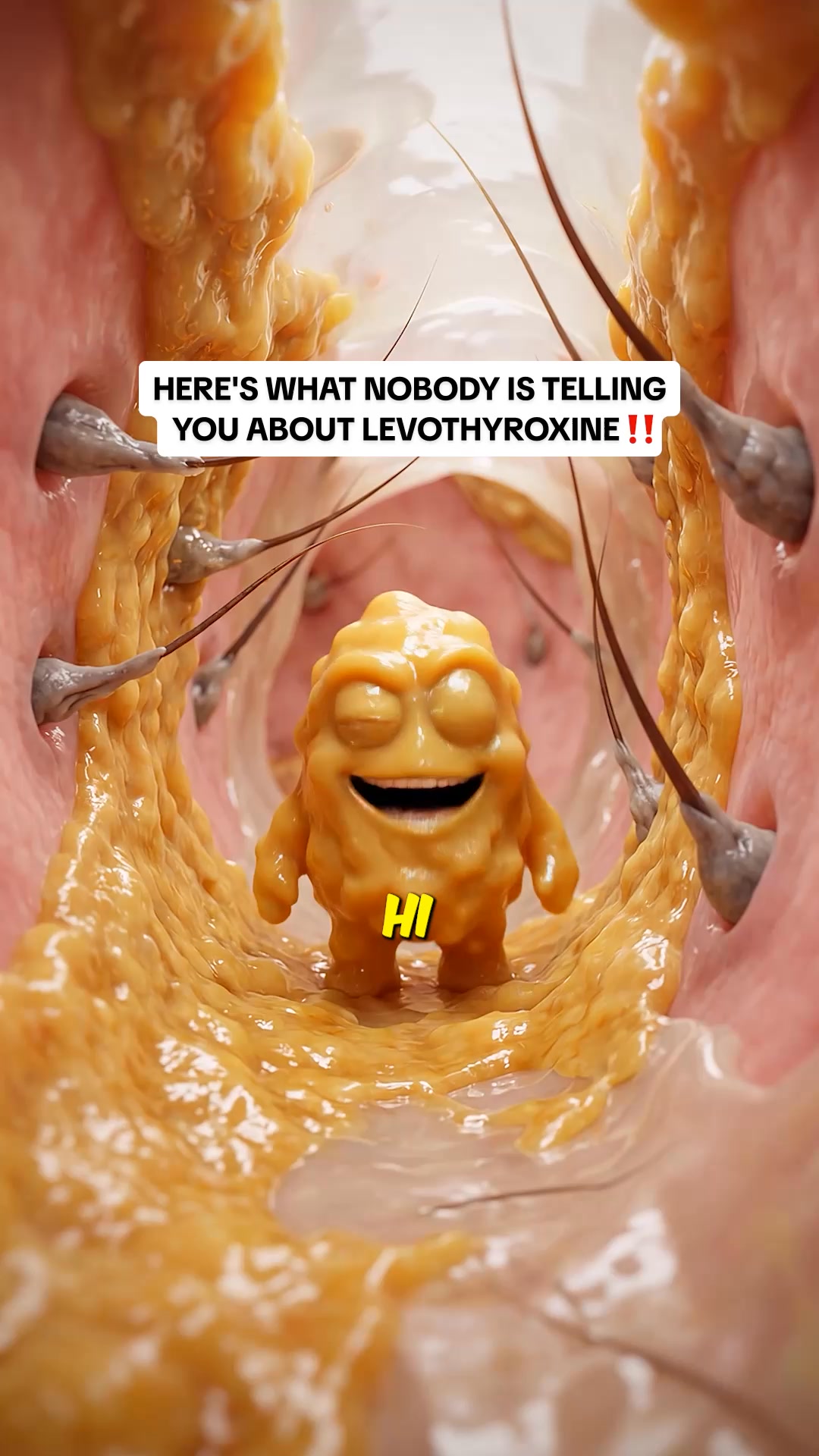
- Structure: a bold static hook box with the claim, plus a second box for authority/setup — the two-box claim+authority shape that won across the mined ads.
- Emoji: one that sparks emotion / urgency / curiosity (🚨 ⚠️ 😲 😳 😩) — never a neutral/informational one (📈, ➡️). Match it to the device.
- Type: big, clean, readable. Serious-authority tone (investigative / lab-coat), not a playful TikTok question.
- Reveal: claim lands first; the second line drops after — the loop snapping open.
Not a fixed 3 seconds. Each line stays up as long as the viewer needs to comfortably read it. Storyboard baseline: line 1 holds to ~4.5s, line 2 from ~5.2s to ~10s. Read-time is the floor — lengthen if a line needs it.

06Editing brief — pace, style, vibe
07Visuals — keep the eyes engaged
Faces are the spine, and here they are rendered faces — big, readable, feature-animation expressions built to land in one glance, cinematic staging throughout, never selfie framing and no handheld anywhere. Two worlds carry the whole film: the suburban house (the dining room is the hero set and it exists in three states — the night of the toast, the muted present, and the golden Sunday) and a second rendered interior, a vast fully-lit records hall, cut to seven times as a retention device and never once explained on its first appearance. The rule that governs that second world: nothing is stuck, nothing gets removed, nothing decays, nothing is dirty and nothing changes temperature. The building is perfect from frame one — it is the couriers who are starving, and the only state change available anywhere in there is weak-to-fed.
Inserts to drop in, synced to the line:
- The Discovery beat, on the witness: a clean locked single of the son-in-law, seated, not clapping, eyes down at his plate, 3.5 seconds — deliberately longer than any other single in the beat. Framing, lens, height and eyeline are a contract; the Reaction beat reproduces them exactly and inverts only his eyes.
- The Mirror beat, on the concealment system: alarms firing, a list under another list, the fridge calendar — then she steps away, stops, comes back and runs the same line again. That double-check is the beat's most legible sound-off frame.
- The Reveal beat, on the product landing: the dark bottle set down on the dining table directly in front of the chair where the toast fell apart, locked, four seconds, with the score turning on that exact frame. Never a kitchen counter, in this beat or any other.
- The mechanism beat, on the rationing line: the records hall — every lamp burning, every shelf stocked, one card pristine and legible ten feet up, and a courier going down mid-stride six feet short of a shelf that has what he was sent for.
- The ingredients beat, on the five actives: one physical action per active, in causal order, each in its own zone of the hall — the loading bay, the bench converter, the far aisle, the long table, the doorway. No ingredient cards, no lower-thirds, no callouts; naming them on screen turns a relay into a supplements panel.
- The Weeks 3-4 beat, on the prop payoffs: the ink washing off the back of her hand and not being rewritten, the fridge calendar coming down, the alarms being deleted, and the elastic band snapping onto an empty hand.
- The Realization beat, on the thesis: the same shelf, the same card, ten feet up, in exactly the same condition as the first time you saw it — frame-identical, and the fact that nothing about it has changed is the whole argument.
Layouts to use:
- Small bottom-centre insert — the default for the memory props (the hand, the calendar, the card stack) for a beat on the concrete nouns, then straight back to faces.
- Full-frame cut to the second rendered world — big beats only, seven times, always a hard cut in and a hard cut out, never a transition and never explained.
- Full-frame karaoke lyric card, lower-centre, seven words a card maximum, running the sung line verbatim — suppressed for the first five seconds of every opener so the burned hook card owns the mute window on its own.
Two camera moves worth it:
- A slow crane up through the records hall on its first full reveal — it is the only shot that has to sell the place as somewhere you could walk around in rather than a diagram.
- A slow push-in on the shelf card at the mechanism beat, close enough to read the name on it. Everything else in the film is locked: the Reframe beat has no camera move at all, deliberately, so any micro-drift in the render reads as stillness instead of as a fault.
08Speakers
Pick an ethnicity (face + matching voices) and a market. Image/voice prompts written for GPT Image 2 / Nano Banana Pro + ElevenLabs.
Medium-close shot of a South Asian woman with warm brown skin, deep brown eyes, and sleek dark hair parted in the middle, in her early 50s, a 3D-animated character, not a live performer — big, readable feature-animation expressions built to land in one glance: vulnerable and held down through the first act, then smug, unapologetic satisfaction at the peak and warm certainty at the close. Sympathetic in her worst state, never repulsive, and never de-aged, slimmed or morphed at any point. She is rendered as a CGI character inside an animated feature world, seated at her own dining table mid-toast with the glass raised, mouth open and nothing coming out. This is a 3D character model, never a live-action performer and never a to-camera presenter. She wears an ordinary suburban knit and plain everyday jewellery, styled as a CG character model rather than a wardrobe fitting — nothing that reads as a costume, a uniform or a credential. Background: a golden-hour suburban dining room built as a 3D animated set — the hero location of the film, in three states across the arc. There is no studio, no shoot day, no location and no live-action plate anywhere in this build. Rendered as a stylized 3D-animated character (clean Pixar/CG-render look), vibrant even studio lighting, smooth shapes, bold readable features. NOT photorealistic, NOT a real photograph.
SUNG, NOT SPOKEN — this narration is generated as a SONG in Suno against ONE pinned voice model and stitched section by section; do not book a voice actor and do not run it as a read. Use the accent line below only as the reference for what that singing voice should sound like: a woman in her early 50s, first-person and retrospective, vulnerable at the start and confident by the end, at about 153 words a minute, sung and unhurried. Accent / voice: General American with a South-Asian inflection — a light melodic lilt.
SUNG, NOT SPOKEN — this narration is generated as a SONG in Suno against ONE pinned voice model and stitched section by section; do not book a voice actor and do not run it as a read. Use the accent line below only as the reference for what that singing voice should sound like: a woman in her early 50s, first-person and retrospective, vulnerable at the start and confident by the end, at about 153 words a minute, sung and unhurried. Accent / voice: General American with only a trace of South-Asian color.
09Comp inspiration — pick what fits (you won't use it all)
A menu, not a checklist — these are the strongest references for this ad. Borrow the technique that serves it and leave the rest; one video won't (and shouldn't) carry all of them.
10Script
Clean spoken dialogue — copy-ready.
Three years ago, at my daughter's engagement dinner, I called her sweetheart. Her name would not come. Twenty-eight years I had known it. I got through the whole toast without saying it once. So here's what happened after.
Two in the morning, alone in a car park, I typed "early onset dementia at fifty-three" into my phone. One letter at a time. What sent me to that search bar started three years earlier. My daughter's engagement dinner.
If you've sat in a parked car before a family dinner, saying three names to yourself so they'd be there when you needed them.. three years, that was me. And it started at my daughter's engagement dinner.
I toasted my own daughter for twenty minutes on "sweetheart" and "my girl." Glass up, smiling, and her name sat behind a wall the whole time. Everybody clapped. One person didn't. Her new fiancé looked at his plate, and he did not look back up. In the bathroom, I wrote her name on my hand.
That was three years ago. I'm 53 now. And I spent those three years building a life that hides it. Alarms for everything. Lists for the lists. The calendar on the fridge I check twice before I let myself speak. From the outside, I looked fine. Everyone got fed another version of me. For three years, my family has been meeting a woman I would not have let in the house.
I did what you're supposed to do. Crosswords with my coffee. Fish oil. A brain-training app that promised me seven minutes a day. I cut the wine. I slept nine hours. Nothing moved. So I asked my doctor. She watched me describe it for two minutes, said the word "stress," and offered me a memory-clinic waiting list. Two years long. I cried in the car.
Then one night, after another dinner I'd survived on nods, I sat in the car park and typed "early onset dementia at fifty-three" into my phone. One letter at a time. Two in the morning. And then I called Carol. My oldest friend. Nineteen years behind a pharmacy counter. I said, "Nineteen years, Carol. How many women have you watched disappear like this?" She went quiet for a long time. Then she said, "I'm driving over tomorrow. Don't argue."
She drove over the next day. No hug. No tears. She put a small dark bottle on my dining table, in front of the chair where the toast fell apart. Not a pill. Not a prescription. A liquid. A thyroid formula in berry drops, held under the tongue once a morning. It's called Kindled. She said, "Nineteen years, I've handed the same prescription across that counter to a hundred women like you, and watched every one come back for a higher dose. The ones who came back better all figured out the same thing."
I pushed the bottle back at her. I said, "Carol, I don't need drops. I need a neurologist." She caught my hand. She said, "It was never your memory. It was the fuel your memory runs on."
"Your brain is the most expensive thing you own to run. It burns T3. Active thyroid hormone. And when T3 runs short, your brain doesn't break. It RATIONS. It rations everything at once. The words. The hair. The temperature. The gut. The mood. Not five problems. One thing going wrong in five places. You can't practice your way out of a fuel shortage."
Then she walked me through it. Iodine hands a thyroid its raw material. Selenium, the converter. It turns T4 into T3, the form a body can actually use. Zinc carries that T3 the last step, into the cells that ordered it. Vitamin D3 feeds the whole line. Most of us run low. Ashwagandha, the old Ayurvedic adaptogen. It stops stress from taking the fuel you just made. No iron, on purpose. And drops instead of pills, because a slow thyroid slows the gut. Under the tongue, nothing waits in line. She said, "Four weeks. Watch."
Week one, I finished a sentence without going the long way around it. Just one sentence. I noticed. Day nine, I answered the phone without that beat of dread before the caller's name. Week two, the half-second I'd learned to leave in front of people's names? I stopped needing it. I started talking the way you walk when you stop watching your feet. And on Friday night I was still at the table at ten o'clock, holding every thread of the conversation.
Week three, I said my daughter's name out loud, alone in my kitchen, just to feel it arrive on time. It did. Every time. That week my hands stopped being cold. Week four, I caught myself checking the fridge calendar once instead of twice. Then I took it down altogether. The alarms went next. And the name I'd been writing on my hand stayed off it.
Then my daughter called. Sunday dinner. The whole family. Same dining room, same chairs, same faces. The old me would have started preparing on Thursday. Rehearsing in the car. Writing on my hand. I walked in with nothing written anywhere. And the man who looked at his plate three years ago sat down directly across from me.
Halfway through dinner, I said it. "Emily." Not because I had to. Because I could. "Emily, pass the bread." My daughter stopped mid-sentence and stared at me. And her husband, the man who watched me lose her name and looked at his PLATE, looked up. He could not hold my eye. I did not help him. I did not soften it. I just smiled, and said her name again.
There was a woman at that table who has only known me three years. His mother. She has only ever met the woman with the wall. The one who nods, and waits, and lets other people finish her sentences. She put her fork down in front of everyone and said, "I didn't know you were like this." And I looked right at her and said, "I am. I have ALWAYS been like this."
I left that dinner having remembered every name in the room. And for the first time in three years, I did not sit in the car park afterwards, running the autopsy. I just drove home. Windows down. Radio loud.
Two weeks later, Emily saw the bottle on my dining table. She's thirty-one. She has been flat since the baby came. Foggy, exhausted, told it's just motherhood. She watched me come back to myself in a month. And she booked the thyroid test that nobody, in thirty-one years, had ever once offered her.
Here's what I got wrong for three years. I thought I was disappearing. I thought I was turning into a worse mother, a worse friend, a worse me, one lost name at a time. I wasn't. Her name was never gone. It sat exactly where I left it, twenty-eight years deep, in perfect condition. I wasn't disappearing. I was running out of fuel. And the morning the fuel came back, so did I. Not the thirty-year-old me. The one I was supposed to be at fifty-three.
Look, I don't know where you're at right now. Maybe names go missing at your own table. Maybe you rehearse in the car before dinners. Maybe you've done the crosswords, the fish oil, the app that promised you seven minutes a day. Maybe somebody said the word "stress" and offered you a waiting list. Don't let them file you under aging. A crossword cannot feed a starving brain. Fuel can. Four weeks is what it took me. You get a thirty-day money-back guarantee to find out if the names start arriving on time. And honestly, you'll know before the guarantee does. Kindled sells out, because women who get their names back don't stop buying it. So go see if it's in stock.
🎵 Full Sung Lyric — copy & paste into Suno (this audio is a SONG, not a voice-over read)▸
Three years ago, at my daughter's engagement dinner, I called her sweetheart. [pause] Her name would not come. Twenty-eight years I had known it. I got through the whole toast without saying it once. So here's what happened after.

Two in the morning, alone in a car park, I typed "early onset dementia at fifty-three" into my phone. One letter at a time. What sent me to that search bar started three years earlier. My daughter's engagement dinner.

If you've sat in a parked car before a family dinner, saying three names to yourself so they'd be there when you needed them... three years, that was me. And it started at my daughter's engagement dinner.

I toasted my own daughter for twenty minutes on "sweetheart" and "my girl." Glass up, smiling, and her name sat behind a wall the whole time. Everybody clapped. One person didn't. Her new fiancé looked at his plate, and he did not look back up. [pause] In the bathroom, I wrote her name on my hand.

That was three years ago. I'm 53 now. And I spent those three years building a life that hides it. Alarms for everything. Lists for the lists. The calendar on the fridge I check twice before I let myself speak. From the outside, I looked fine. Everyone got fed another version of me. [quieter] For three years, my family has been meeting a woman I would not have let in the house.

I did what you're supposed to do. Crosswords with my coffee. Fish oil. A brain-training app that promised me seven minutes a day. I cut the wine. I slept nine hours. Nothing moved. So I asked my doctor. She watched me describe it for two minutes, said the word "stress," and offered me a memory-clinic waiting list. Two years long. I cried in the car.

Then one night, after another dinner I'd survived on nods, I sat in the car park and typed "early onset dementia at fifty-three" into my phone. [pause] One letter at a time. Two in the morning. And then I called Carol. My oldest friend. Nineteen years behind a pharmacy counter. I said, "Nineteen years, Carol. How many women have you watched disappear like this?" She went quiet for a long time. Then she said, "I'm driving over tomorrow. Don't argue."

She drove over the next day. No hug. No tears. She put a small dark bottle on my dining table, in front of the chair where the toast fell apart. Not a pill. Not a prescription. A liquid. A thyroid formula in berry drops, held under the tongue once a morning. It's called Kindled. She said, "Nineteen years, I've handed the same prescription across that counter to a hundred women like you, and watched every one come back for a higher dose. The ones who came back better all figured out the same thing."

I pushed the bottle back at her. I said, "Carol, I don't need drops. I need a neurologist." She caught my hand. She said, [pause] "It was never your memory. It was the fuel your memory runs on."

"Your brain is the most expensive thing you own to run. It burns T3. Active thyroid hormone. And when T3 runs short, your brain doesn't break. It RATIONS. It rations everything at once. The words. The hair. The temperature. The gut. The mood. Not five problems. One thing going wrong in five places. You can't practice your way out of a fuel shortage."

Then she walked me through it. Iodine hands a thyroid its raw material. Selenium, the converter. It turns T4 into T3, the form a body can actually use. Zinc carries that T3 the last step, into the cells that ordered it. Vitamin D3 feeds the whole line. Most of us run low. Ashwagandha, the old Ayurvedic adaptogen. It stops stress from taking the fuel you just made. No iron, on purpose. And drops instead of pills, because a slow thyroid slows the gut. Under the tongue, nothing waits in line. She said, "Four weeks. Watch."

Week one, I finished a sentence without going the long way around it. Just one sentence. I noticed. Day nine, I answered the phone without that beat of dread before the caller's name. Week two, the half-second I'd learned to leave in front of people's names? I stopped needing it. I started talking the way you walk when you stop watching your feet. And on Friday night I was still at the table at ten o'clock, holding every thread of the conversation.

Week three, I said my daughter's name out loud, alone in my kitchen, just to feel it arrive on time. It did. Every time. That week my hands stopped being cold. Week four, I caught myself checking the fridge calendar once instead of twice. Then I took it down altogether. The alarms went next. And the name I'd been writing on my hand stayed off it.

Then my daughter called. Sunday dinner. The whole family. Same dining room, same chairs, same faces. The old me would have started preparing on Thursday. Rehearsing in the car. Writing on my hand. I walked in with nothing written anywhere. And the man who looked at his plate three years ago sat down directly across from me.

Halfway through dinner, I said it. "Emily." Not because I had to. Because I could. "Emily, pass the bread." My daughter stopped mid-sentence and stared at me. And her husband, the man who watched me lose her name and looked at his PLATE, looked up. He could not hold my eye. [pause] I did not help him. I did not soften it. I just smiled, and said her name again.

There was a woman at that table who has only known me three years. His mother. She has only ever met the woman with the wall. The one who nods, and waits, and lets other people finish her sentences. She put her fork down in front of everyone and said, "I didn't know you were like this." [pause] And I looked right at her and said, "I am. I have ALWAYS been like this."

I left that dinner having remembered every name in the room. And for the first time in three years, I did not sit in the car park afterwards, running the autopsy. [exhale] I just drove home. Windows down. Radio loud.

Two weeks later, Emily saw the bottle on my dining table. She's thirty-one. She has been flat since the baby came. Foggy, exhausted, told it's just motherhood. She watched me come back to myself in a month. And she booked the thyroid test that nobody, in thirty-one years, had ever once offered her.

Here's what I got wrong for three years. I thought I was disappearing. I thought I was turning into a worse mother, a worse friend, a worse me, one lost name at a time. I wasn't. Her name was never gone. It sat exactly where I left it, twenty-eight years deep, in perfect condition. I wasn't disappearing. [pause] I was running out of fuel. And the morning the fuel came back, so did I. Not the thirty-year-old me. The one I was supposed to be at fifty-three.

Look, I don't know where you're at right now. Maybe names go missing at your own table. Maybe you rehearse in the car before dinners. Maybe you've done the crosswords, the fish oil, the app that promised you seven minutes a day. Maybe somebody said the word "stress" and offered you a waiting list. Don't let them file you under aging. [pause] A crossword cannot feed a starving brain. Fuel can. Four weeks is what it took me. You get a thirty-day money-back guarantee to find out if the names start arriving on time. And honestly, you'll know before the guarantee does. Kindled sells out, because women who get their names back don't stop buying it. So go see if it's in stock.